JSA ENGINEERING & SERVICES

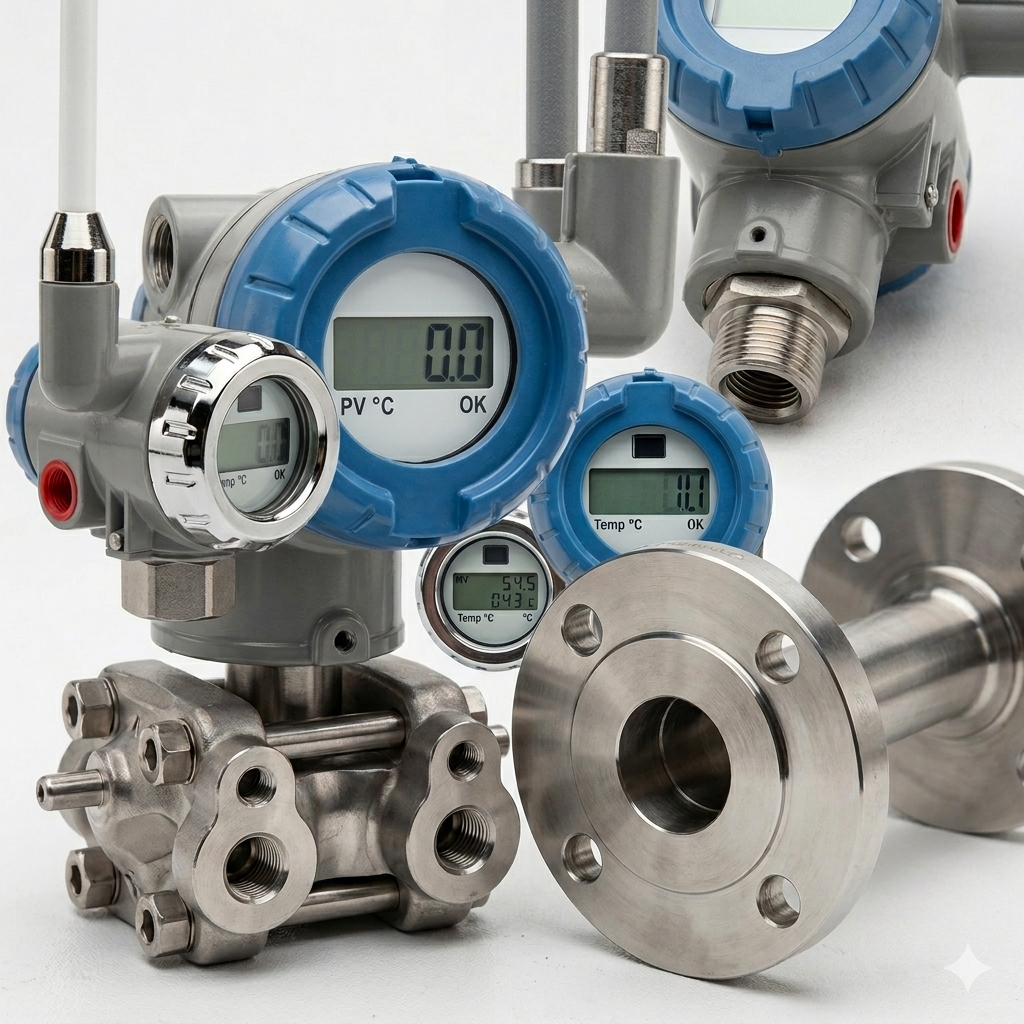
Smart Wireless Transmitters are advanced field instruments used in industrial automation to measure process variables such as pressure, temperature, level, and flow and transmit that data to a control system without the need for physical wiring.
Sensor Element: The part in contact with the process that detects physical changes (e.g., a pressure diaphragm).
Microprocessor: The "brain" that converts the raw signal into digital data, performs self-diagnostics, and manages power.
Radio Module: Transmits the data using industrial wireless protocols.
Power Module: Usually a long-life high-capacity battery designed to last 5–10 years.
Cost Reduction: Eliminates the need for expensive cabling, conduit, and labour intensive trenching. Installation costs can be reduced by up to 50–90%
| Protocol | Best For |
| Wireless HART | Process Monitoring |
| ISA100.11a | Plant-wide Control |
| Lo Ra WAN | Long Range (Remote asset tracking, tank levels (up to 15km) |
| Industry .4.0 | Low Latency (Mission-critical control and mobile robotics ) |

Deals in Technical & Services - Boiler & Turbine Spares. -Steam valves , traps, fitting , Pneumatic Control Valves ( IBR & NON IBR) ESP Spares & Services Electrical / Instrumentation Spares , Mechanical Engineering & Equipment's instruments & Engineering .Consultancy"
© 2025 JSA ENGINEERING & SERVICES - All Rights Reserved | Developed by Anuj Yadav